“Home is not where you are born; home is where all your attempts to escape cease.”
— Naguib Mahfouz, Nobel laureate whose novel, Children of the Alley, was banned in his home country
What We Do
City of Asylum/Detroit provides two-year fellowships for writers and artists who are in exile from their home countries and under threat of persecution because of their work. The goal of this sanctuary program is to enable each fellow to continue to produce work. During the fellowship, we provide a home, a stipend, legal counsel, medical benefits, and access to professional development opportunities.
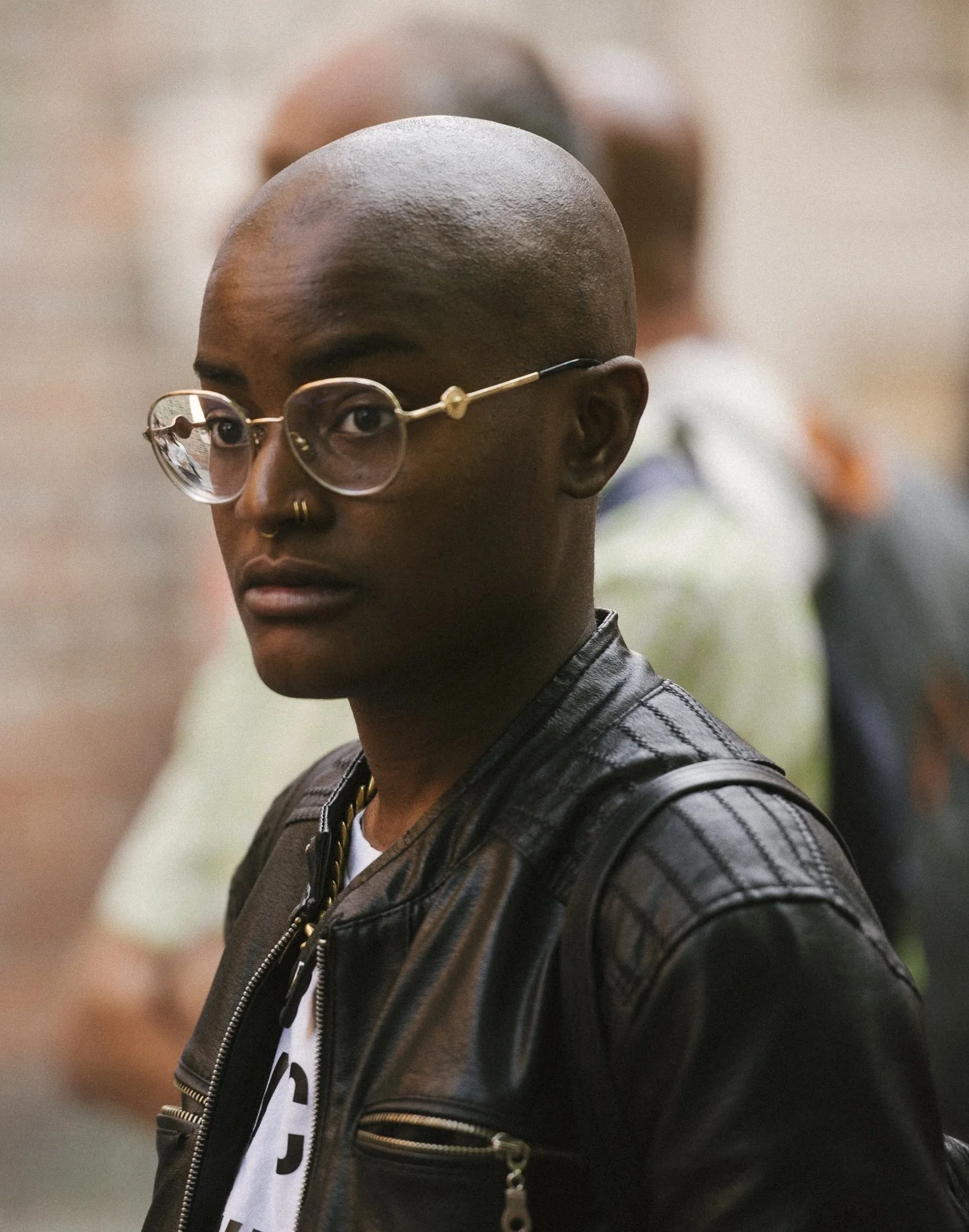
Fellow in Exile Aaiún Nin
Poet, Angola
As an outspoken critic of Europe's legal discrimination of immigrants and police violence, Aaiún Nin’s work explores the effects of racism, colonialism, gender and sexual violence, queer love and desire.
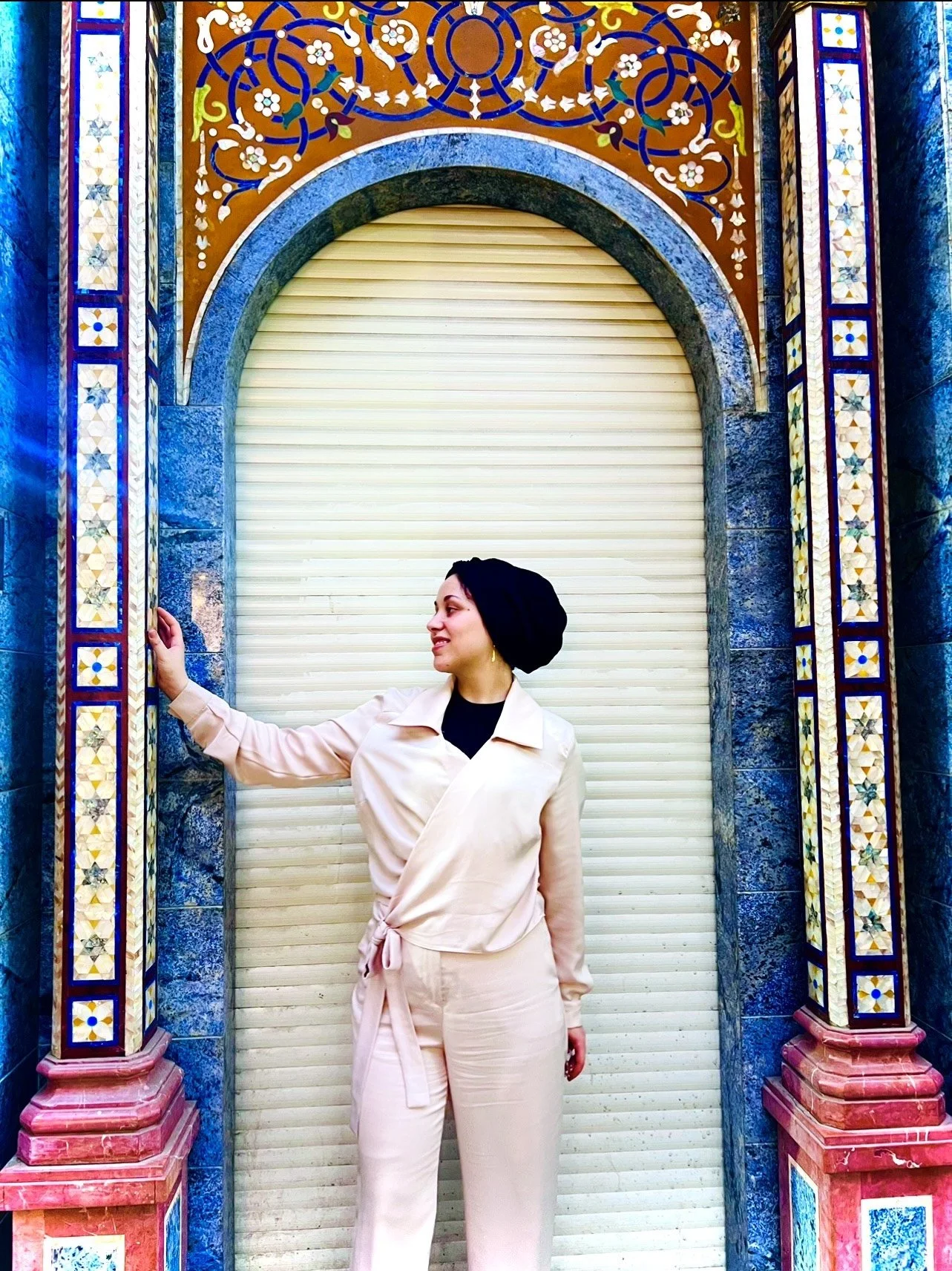
Fellow in Exile Taimaa Salama
Visual Artist, Palestine
Taimaa Salama’s tactile paintings combine sculpture, photography, and Palestinian traditional craft in ways that allow blind and low-vision children to engage with art.

Fellow in Exile Tareq Hajjaj
Poet and Journalist, Palestine
Tareq Hajjaj is the Gaza Correspondent at Mondoweiss and the author of the poetry collection Ibn Qamti (Gaza Ministry of Culture).

Our Mission
City of Asylum starts from a place of service to international writers and artists who are in danger because of who they are and the work they do. Their free expression threatens existing power structures, and we believe that protecting and supporting their voices is a powerful way to work towards justice on a global stage.
Our Vision
We envision a neighborhood where global and local concerns intersect, and where multiple communities are empowered through mutual support. Our programs transform blighted properties into spaces for local and global culture. All our programs are free to the public, and are staged outdoors whenever possible, to be accessible to as many people as possible.
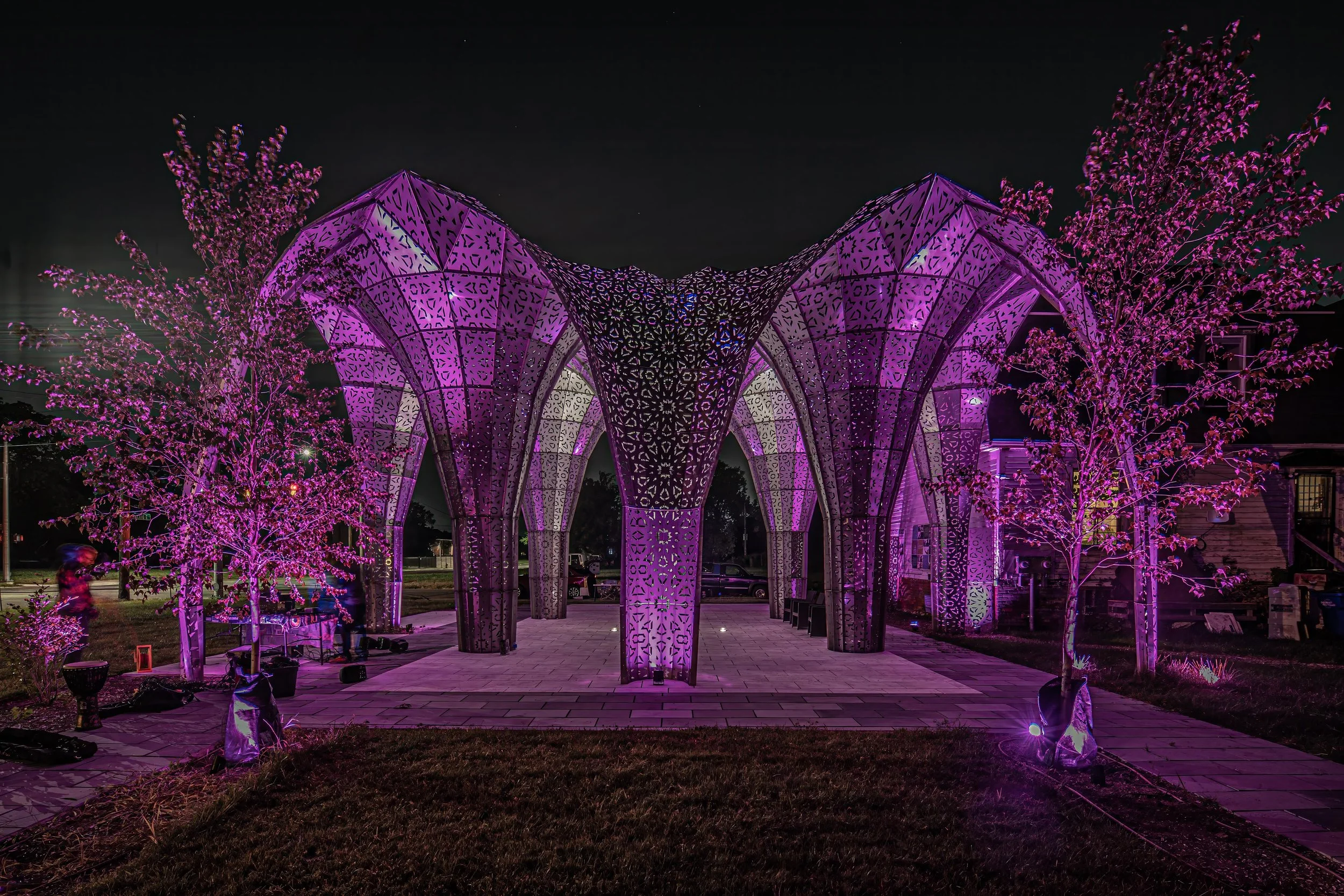
The American Riad.
Credit: Roketa
“There's really no such thing as the 'voiceless.' There are only the deliberately silenced, or the preferably unheard.”
— Arundhati Roy, who was imprisoned for her support of Kashmiri independence
Our Approach
We believe our fellows will have an outsized impact in Detroit by bringing their powerful voices for justice to our community. They take on disproportionate risks as they bear witness to inhumanity and catalyze solidarity. We bring over artists whose work and personal circumstances reflect and amplify the concerns of Detroit, where safe haven and self-determination are grounded in local history.

City of Asylum resident Tuhin Das in front of “House Poem,” a public artwork created by former resident Huang Xiang.
Credit: Ashley Cleek

Our neighbor, the Michigan Urban Farming Initiative, is one of four urban farms providing locally grown produce in walking distance of our artist residences.
Credit: Michelle Gerard
Our Commitment
We go beyond facilitating a typical arts residency environment by building connected relationships with and between our fellows and their neighbors. We invite writers and artists whose voices, if safeguarded and amplified, will have the most impact. We equip them with both material and immaterial resources to support their time here. Locally, we invite poets, artists, neighbors, activists, and others to shape our development as part of a growing community.
